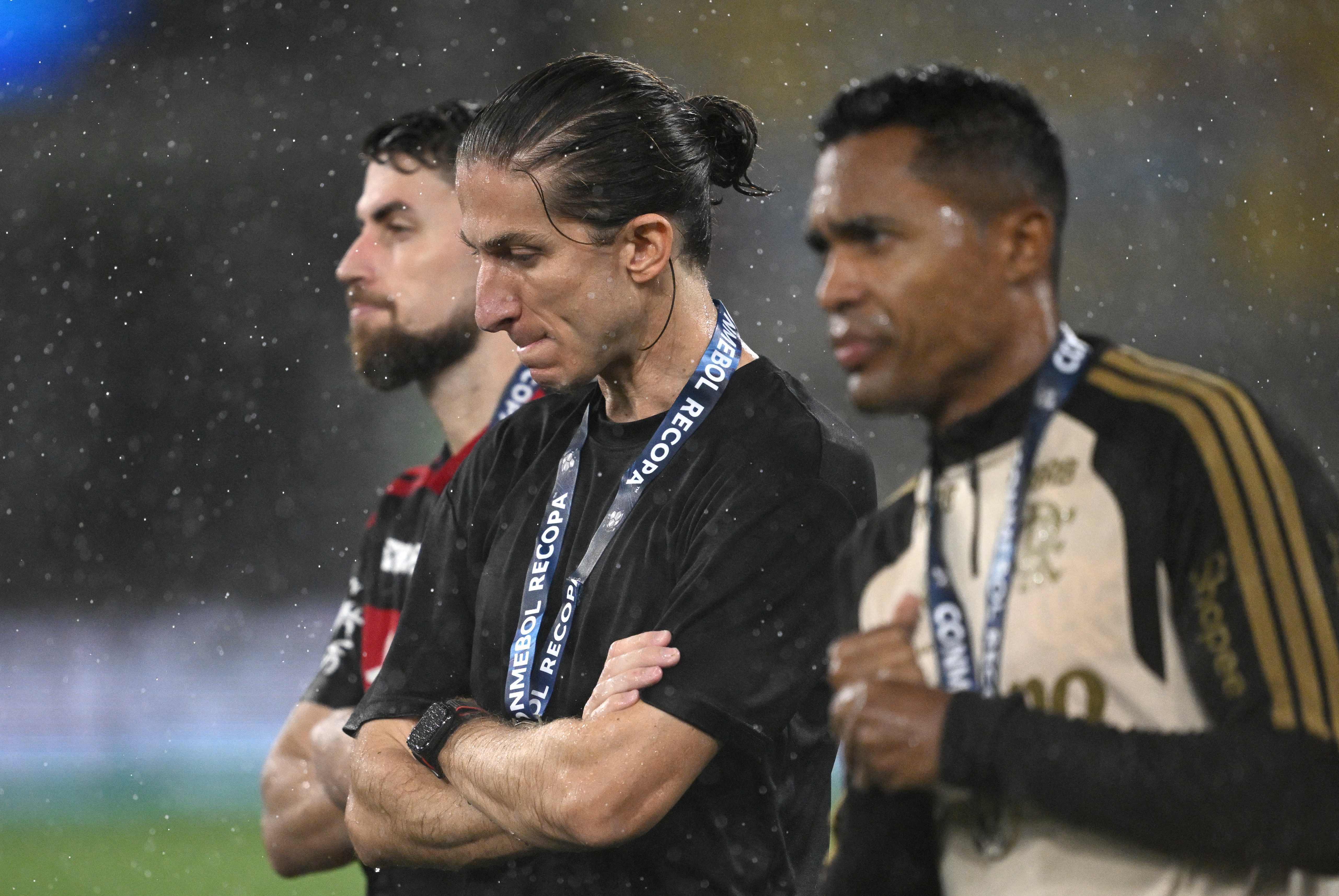
The Shockwave: A Triumph Turned Termination for Filipe Luís at Flamengo
In the unpredictable world of elite football, few events are as perplexing as a coach being dismissed immediately following a resounding victory. Such was the case with legendary left-back Filipe Luís, whose tenure as Flamengo's manager came to an abrupt end on March 3rd, not after a devastating loss, but a triumphant 8-0 thrashing of Madureira. This stunning **demissão Filipe Luís** sent ripples through Brazilian football, leaving fans, pundits, and even the coach himself reeling from the sheer unexpectedness of the decision.
The footballing landscape is accustomed to coaches facing the axe after a string of poor results, a critical defeat, or an early exit from a major competition. Indeed, whispers had already begun circulating that Filipe Luís's position would become untenable if Flamengo lost the upcoming Campeonato Carioca final against arch-rivals Fluminense on March 8th. The stage seemed set for a dramatic showdown, where his fate would be sealed one way or another. Instead, the hammer fell prematurely, just hours after his team delivered an eight-goal spectacle, seemingly showcasing their potential.
The surprise was palpable. Filipe Luís had just concluded his post-match press conference, confidently projecting plans for the upcoming crucial fixture against Fluminense. He spoke of tactical adjustments, player form, and the team's readiness for the challenge ahead, utterly unaware that his journey with the Rubro-Negro had already reached its final stop. This paradoxical scenario – a decisive win leading to a sacking – underscores the complex, often opaque dynamics at play within top-tier football clubs, where underlying issues can overshadow immediate results.
Bap's "Wrong Train" Metaphor: Unpacking the Justification
Taking full responsibility for the premature **demissão Filipe Luís** was Flamengo president Luiz Eduardo Baptista, widely known as Bap. In an audio message circulated among club directors and later leaked to the press, Bap offered a stark, vivid justification for his decision, comparing the club's situation to catching the "wrong train."
"In my view, it's like this," Bap explained, "when you catch the wrong train in life, you know what you have to do? Get off at the first possible station and go back. My unwavering commitment is to the institution, to Flamengo. When I don't believe that what is being done will take Flamengo to where we want Flamengo to be, I have to act. That's exactly what I did. I am intervening fundamentally because I believe that in the totality of things that were being done, we were not going in the direction I deem adequate for the institution."
This powerful metaphor speaks volumes about the club's leadership philosophy. For Bap, immediate results, even dominant ones like an 8-0 victory, were secondary to the perceived long-term trajectory and adherence to a specific institutional vision. He implied that despite the scoreline, the *process* or *direction* under Filipe Luís was fundamentally misaligned with Flamengo's ambitious goals and identity. It wasn't about the destination of that particular match, but the overall journey.
What also struck many was the communication breakdown. Bap, while taking responsibility for the decision, reportedly did not deliver the news directly to Filipe Luís. Instead, this sensitive task fell to executive José Boto. This lack of direct communication from the highest level to the outgoing coach, particularly one with Filipe Luís's standing and history at the club, added another layer of intrigue and disappointment to an already perplexing situation. It raises questions about leadership transparency and the way crucial decisions are handled within the club's hierarchy.
Beyond the Scoreline: Deeper Cracks in the Relationship
While the 8-0 victory provided a dramatic backdrop, the seeds of Filipe Luís's departure had been sown much earlier, growing amidst a tumultuous period of contractual negotiations and simmering disagreements. The **demissão Filipe Luís** wasn't an impulsive reaction to a sudden crisis, but rather the culmination of a deeply strained relationship between the coach and the Flamengo board.
The Tumultuous Contract Renewal Saga
The most significant contributing factor to the frayed ties was the prolonged and contentious process of contract renewal. Despite Filipe Luís's remarkable achievements with the club, including spearheading the team to historic triumphs like the Campeonato Brasileiro and the Copa Libertadores just the previous year, securing a new deal proved arduous. The negotiations stretched out considerably, far longer than either party initially anticipated, leading to palpable tension.
Initially, a new agreement was eventually reached, reportedly extending his tenure until the end of 2026. However, even during these drawn-out discussions, both sides reportedly harbored doubts about reaching a "happy ending." From the club's perspective, Filipe Luís's financial demands were a point of contention, seen as excessive or misaligned with their budgetary parameters. For the coach, the process was further complicated by what he perceived as a frustrating series of information leaks to the media. These leaks, detailing aspects of the private negotiations, undermined trust and created an atmosphere of suspicion. Ultimately, the new contract, which was meant to secure his future until 2027, lasted for less than three months before his abrupt dismissal. This tumultuous journey perfectly illustrates how internal disagreements, even amidst success, can erode working relationships beyond repair.
Impatience vs. Legacy: A Club's High Stakes
Flamengo is a club synonymous with ambition and an unyielding pursuit of glory. Its massive fan base and rich history demand continuous success, creating an environment where patience often wears thin, even for those who have delivered significant silverware. The club's reputation for high demands and swift decisions, as highlighted in articles like
Flamengo's Quick Hook: Filipe Luís Fired Despite Libertadores Glory, is well-established.
Filipe Luís's situation, despite his previous monumental achievements, underscores this demanding culture. While his legacy as a player and his initial success as a coach were undeniable, the club's leadership clearly felt that the *direction* and *philosophy* under his guidance were diverging from their ultimate vision. In such a high-stakes environment, even a minor perceived deviation can trigger drastic action. This often means that a coach's previous triumphs, while appreciated, do not grant immunity from scrutiny or a short leash if the leadership believes the "train is going the wrong way." The constant pressure to not just win, but to win in a specific, sustainable, and institutionally aligned manner, defines the managerial experience at a club like Flamengo.
Lessons Learned: The Volatile World of Elite Football Management
The **demissão Filipe Luís** serves as a potent case study in the volatile, high-pressure world of elite football management. It offers several crucial insights for clubs, coaches, and observers alike:
- Beyond Results, It's About Alignment: While results are paramount, this incident highlights that they are not the *only* factor. A club's leadership may prioritize philosophical alignment, long-term vision, development pathways, or even internal power dynamics over immediate match outcomes. Coaches must not only deliver wins but also ensure their methodology resonates with the club's overall strategic direction.
- The Precarity of the Role: Even a coach with a strong playing legacy at the club and recent major trophies is not immune to dismissal. This underscores the transient nature of coaching, where job security is a fleeting concept, often hinging on perceptions of progress and future potential rather than just past glories.
- The Importance of Communication and Trust: The strained contract negotiations, the financial disputes, and the allegations of information leaks significantly eroded trust between Filipe Luís and the board. Effective, transparent communication is vital to navigating such complex relationships, and its breakdown can lead to irreparable damage, as explored in Filipe Luís's Flamengo Exit: Contract Drama and Board Impatience Revealed.
- Institutional Over Individual: Bap's "wrong train" analogy firmly placed the institution's welfare above any individual's role. This is a common mantra in top clubs, where the club's identity and long-term success are deemed more important than the tenure of any single manager or player.
- Managing Expectations: Flamengo's ambitious goals mean that winning isn't always enough; *how* you win, and the perceived sustainability of that success, are equally critical. Coaches at such clubs must constantly manage not just team performance but also the high expectations of the board and an immense fan base.
In summary, this episode serves as a powerful reminder that football management at the highest level is a multi-faceted challenge, where tactical prowess and on-field success are just two pieces of a much larger, often politically charged, puzzle.
Conclusion
The **demissão Filipe Luís** from Flamengo stands as one of the most surprising managerial exits in recent memory. Sacked after an emphatic 8-0 victory, his departure was not a knee-jerk reaction to failure but, according to president Luiz Eduardo Baptista, a necessary intervention based on the belief that the team was on the "wrong train." This decision, though jarringly timed, exposed deeper rifts within the club, particularly surrounding a contentious contract renewal process marked by financial disagreements and a breakdown of trust. Filipe Luís's impressive legacy, including leading Flamengo to monumental triumphs, ultimately proved insufficient to secure his long-term tenure in an environment where institutional vision and philosophical alignment took precedence over immediate results. This event offers a compelling insight into the intricate, often brutal realities of elite football management, where even the most decorated figures can find their journey abruptly curtailed if they are perceived to be diverging from the club's unwavering path to glory.