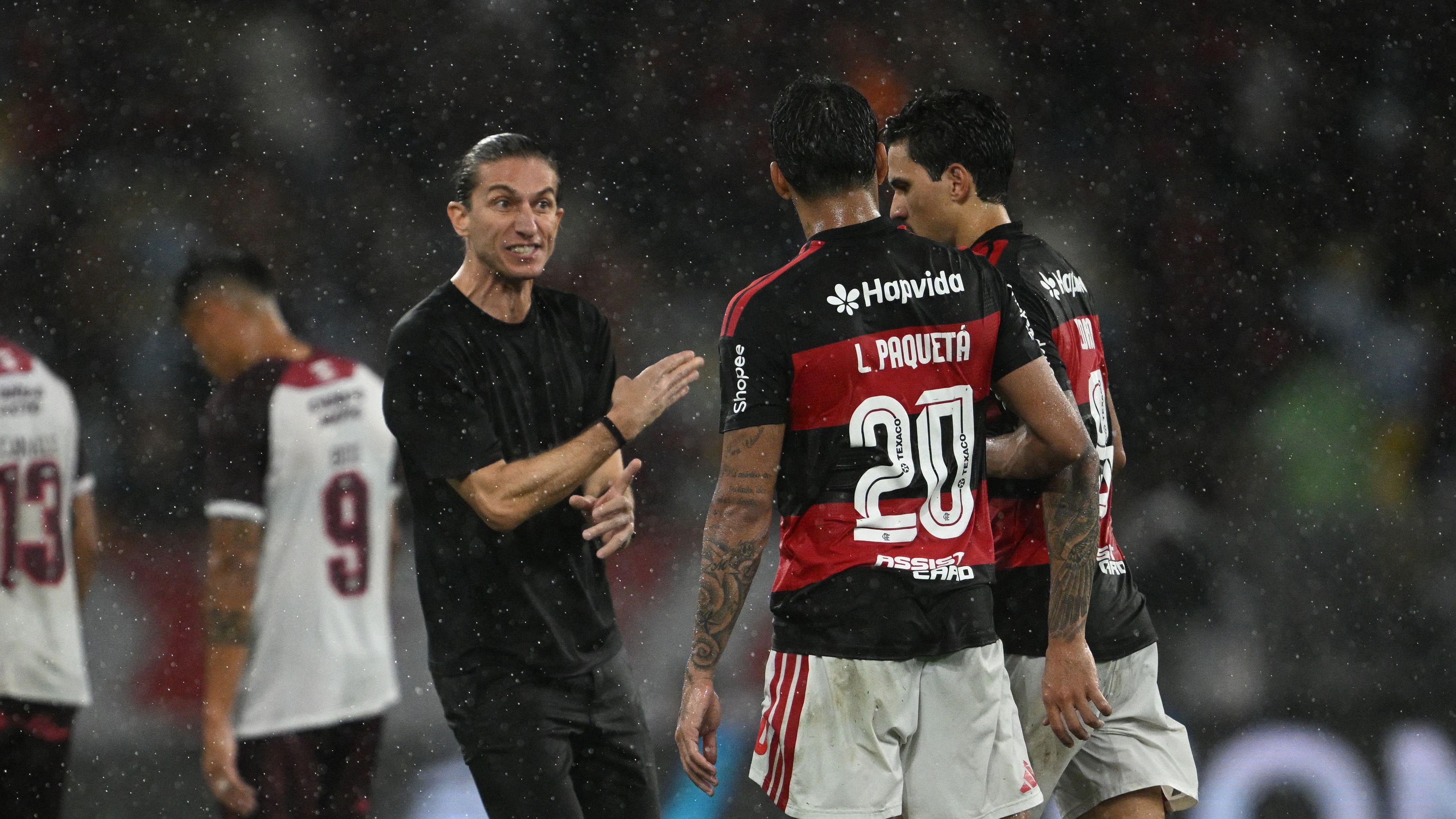
Filipe Luís's Flamengo Exit: Contract Drama and Board Impatience Revealed
The world of football, particularly in Brazil, is no stranger to dramatic managerial changes. Yet, even by these standards, the recent "demissão de Filipe Luís" (dismissal of Filipe Luís) from his coaching role at Flamengo sent shockwaves through the sport. His departure was not merely a surprise; it was an event steeped in perplexing timing, public justifications that raised more questions than answers, and an underlying current of contractual tension that had been brewing for months. This article delves into the intricate details behind Filipe Luís's swift exit, exploring the immediate triggers, the long-standing issues, and what this episode reveals about the high-stakes environment at one of Brazil's biggest clubs.
The unexpected nature of Filipe Luís's sacking was compounded by the fact that it occurred in the immediate aftermath of a resounding 8-0 victory over Madureira. Fans and pundits alike were left bewildered: how could a coach, having just overseen such a dominant performance, find himself out of a job hours later? The conventional wisdom circulating prior to the announcement suggested that Filipe Luís's fate would hinge on the upcoming Campeonato Carioca final against Fluminense, scheduled for the following Sunday. A defeat there might have sealed his destiny. Instead, Flamengo's board decided to pull the trigger much sooner, transforming a moment of on-field triumph into an off-field crisis.
Indeed, Filipe Luís himself appeared to be caught off guard. Following the comprehensive win, he had given a standard post-match press conference, confidently discussing the team's future commitments and preparations for the crucial derby. This public display of forward-looking professionalism starkly contrasted with the reality unfolding behind closed doors. The decision was not just swift; it was, by all accounts, unanticipated by the man at its center, highlighting a significant communication gap and an executive move that prioritised immediate change over strategic patience.
"The Wrong Train": Bap's Controversial Justification
In the wake of the bewildering dismissal, Flamengo president Luiz Eduardo Baptista, widely known as Bap, stepped forward to claim responsibility for the "demissão Filipe Luís." His explanation, disseminated through an audio message among club directors, quickly became the focal point of controversy. Bap famously invoked the metaphor of a "wrong train" to justify the decision: "When you catch the wrong train in life, you know what you have to do? Get off at the first possible station and return."
Bap elaborated, stating that his "unwavering commitment" was to the institution of Flamengo. He argued that if he didn't believe the current path would lead the club to its desired destination, he had a duty to intervene. This perspective suggested a fundamental lack of faith in the long-term project under Filipe Luís, irrespective of recent results. While a president's commitment to the club's vision is paramount, the timing and the dramatic nature of the intervention raised eyebrows. Was it a calculated strategic shift, or an impulsive act driven by underlying frustrations?
Compounding the controversy was the method of communication. Bap admitted that he did not personally convey the decision to Filipe Luís. Instead, the task fell to executive José Boto. This indirect approach further underscored the strained relationship between the coach and the club's highest echelons, hinting at a breakdown in personal trust and professional courtesy that had likely been eroding for some time. Such a distant manner of dismissal, especially for a figure with Filipe Luís's history and stature at the club, only added to the perception of a cold, decisive, and somewhat impersonal corporate maneuver. To understand the deeper context of this swift decision, one might consider
Flamengo Sacks Filipe Luís After 8-0 Win: The 'Wrong Train' Justification, which explores Bap's rationale in more detail.
A Strained Relationship: Contract Drama Behind the Scenes
The "wrong train" analogy, while vivid, likely served as the public rationale for deeper, more systemic issues that had plagued the relationship between Filipe Luís and Flamengo's management. The reference context explicitly states that the rapport between the two parties had been "worn out" ("desgastada") since the prolonged process of contract renewal. This crucial piece of information reveals that the "demissão Filipe Luís" was not an isolated incident but the culmination of simmering tensions.
The contract negotiations were protracted, extending much longer than anticipated. Despite Filipe Luís's illustrious playing career with the club, which included significant titles like the Campeonato Brasileiro and the Copa Libertadores, securing a new deal proved arduous. An agreement was only reached close to the turn of the year for 2026, with the new bond intended to last until the end of 2027. This delay itself spoke volumes about potential disagreements.
Two primary points of contention emerged during these negotiations:
1. **Financial Demands:** Filipe Luís's financial requests reportedly "incomodou a diretoria" (bothered the board). This suggests a clash between the coach's perceived value and the club's financial parameters or willingness to meet those demands. In football, financial terms often reflect a club's commitment to a coach and their long-term project. Any perceived overreach by the coach or stinginess by the club can quickly sour relations.
2. **Information Leaks:** Conversely, Filipe Luís himself was displeased by the "vazamento de informações" (leaking of information) during the negotiation process. Such leaks, often regarding financial figures or internal disputes, can erode trust and create an adversarial atmosphere, making it difficult to find common ground. For a coach, maintaining a unified front with the board is critical, and public leaks undermine that unity.
Ultimately, the new contract, intended to provide stability until 2027, lasted less than three months. This remarkably short tenure for a newly signed deal highlights the profound and unresolvable nature of the underlying issues. Even with the trophies won as a player, the relationship failed to transition smoothly into a coaching partnership.
Flamengo's Impatience: A Culture of High Demands?
Flamengo is a club synonymous with ambition, success, and, by extension, immense pressure. Their massive fan base and significant financial resources demand constant victory and top-tier performance. This high-pressure environment often translates into a culture of impatience, where coaches are given little leeway and even less time to implement long-term strategies. The "demissão Filipe Luís" is a stark illustration of this reality.
Despite his legendary status as a player for Flamengo, contributing to their Copa Libertadores and Campeonato Brasileiro triumphs, Filipe Luís was not afforded the luxury of a prolonged adaptation period as a coach. The external reference explicitly states that Flamengo "showed no patience" with him, despite everything he had achieved. This narrative is not unique to Filipe Luís; Brazilian football, in general, is notorious for its high managerial turnover. The average tenure for a coach in the Brazilian Série A is often less than a year, reflecting a quick trigger finger from boards facing intense fan and media scrutiny.
This culture presents a significant challenge for clubs aiming to build sustainable projects. While demanding excellence is admirable, a lack of patience can hinder a coach's ability to fully implement their philosophy, develop players, and cultivate a cohesive team over time. For Flamengo, the question arises: is this rapid cycle of hiring and firing conducive to achieving their long-term objectives, or does it perpetuate a cycle of short-term fixes? The immediate success of a new manager might be appealing, but consistent, strategic growth often requires more stability. The swiftness of his departure, despite his past glories, is further examined in
Flamengo's Quick Hook: Filipe Luís Fired Despite Libertadores Glory.
**Conclusion**
The "demissão Filipe Luís" from Flamengo serves as a multifaceted case study in the volatile world of professional football management. It was a dismissal that defied conventional timing, occurring after a dominant win, rather than a defeat. It was publicly justified by President Bap's "wrong train" metaphor, signaling a profound lack of faith in the coach's direction, despite his recent appointment. Crucially, the episode unveiled a deeply strained relationship, poisoned by prolonged contract negotiations, financial disagreements, and the corrosive effect of leaked information.
Ultimately, Filipe Luís's exit underscores Flamengo's culture of immense pressure and impatience, where even club legends are not immune to the ruthless demands for immediate results and alignment with the board's vision. For Flamengo, the challenge now lies in finding a leader who can not only deliver on the pitch but also navigate the complex political landscape off it, ensuring that the 'train' is indeed heading in the right direction for sustained success. For Filipe Luís, it marks a sudden and perhaps harsh end to his coaching stint at his beloved club, prompting him to seek his next opportunity to prove his managerial mettle elsewhere.